
Winner of UK Young Engineer of the Year Revealed
Winners of The Big Bang Competition announced, including the new UK Young Engineer of the Year, supported by Thales and UK Young Technologist of the Year, supported by Siemens
Student’s winning STEM projects include a low-cost aircraft to deliver emergency medical supplies and an app for travellers to find experiences that match their emotional needs
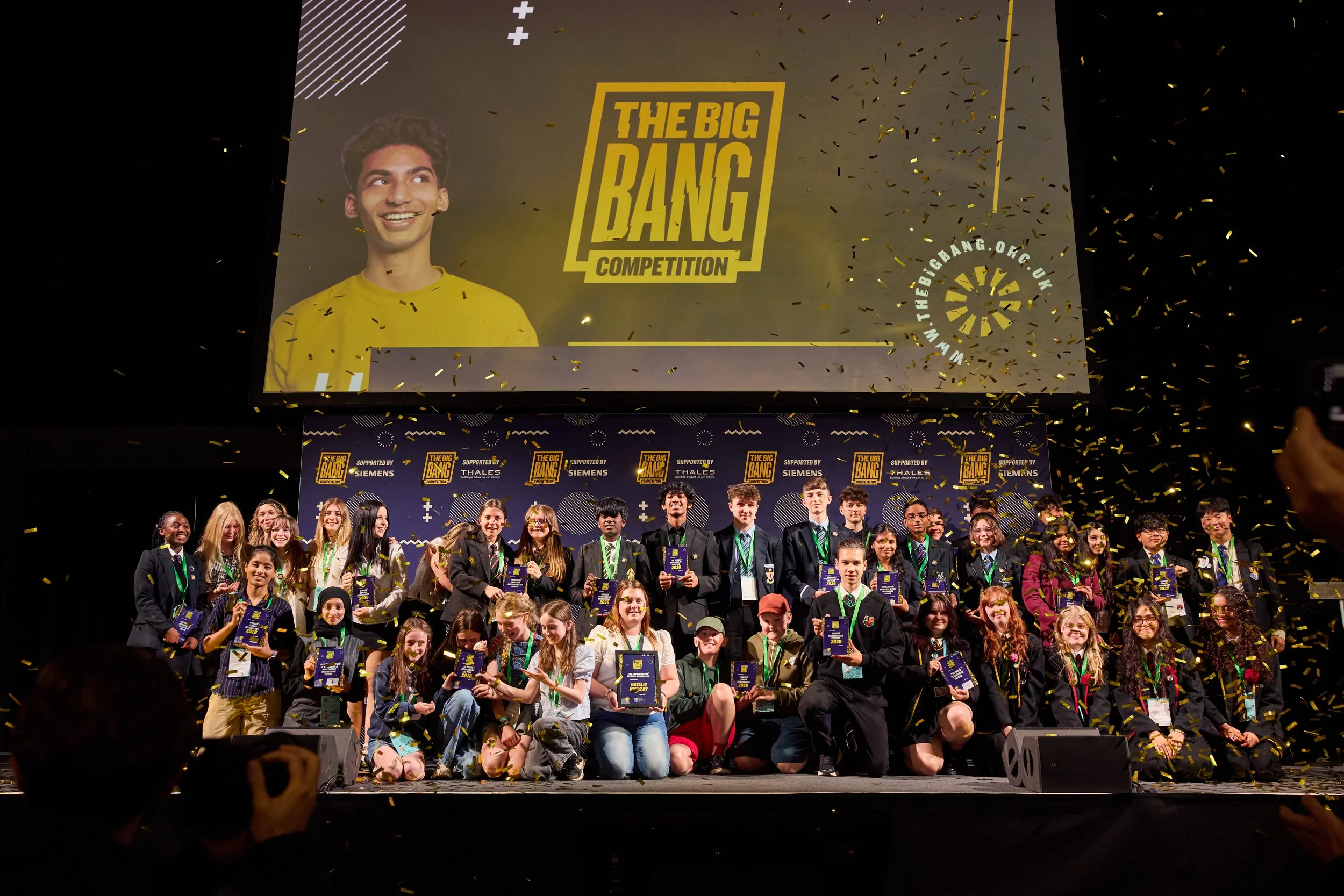
Today (10th June 2026) the winners of The Big Bang UK Young Scientists & Engineers Competition have been named. Held at The Big Bang Fair, the spectacular awards ceremony followed a day-long showcase of talented young innovators.
The Big Bang Competition, run by EngineeringUK, is a prestigious national competition for young engineers, scientists and technologists aged 11 to 18. There are a range of awards and prizes up for grabs, recognising and rewarding talented STEM innovators. The top 3 winners each receiving £1,000 prize money.
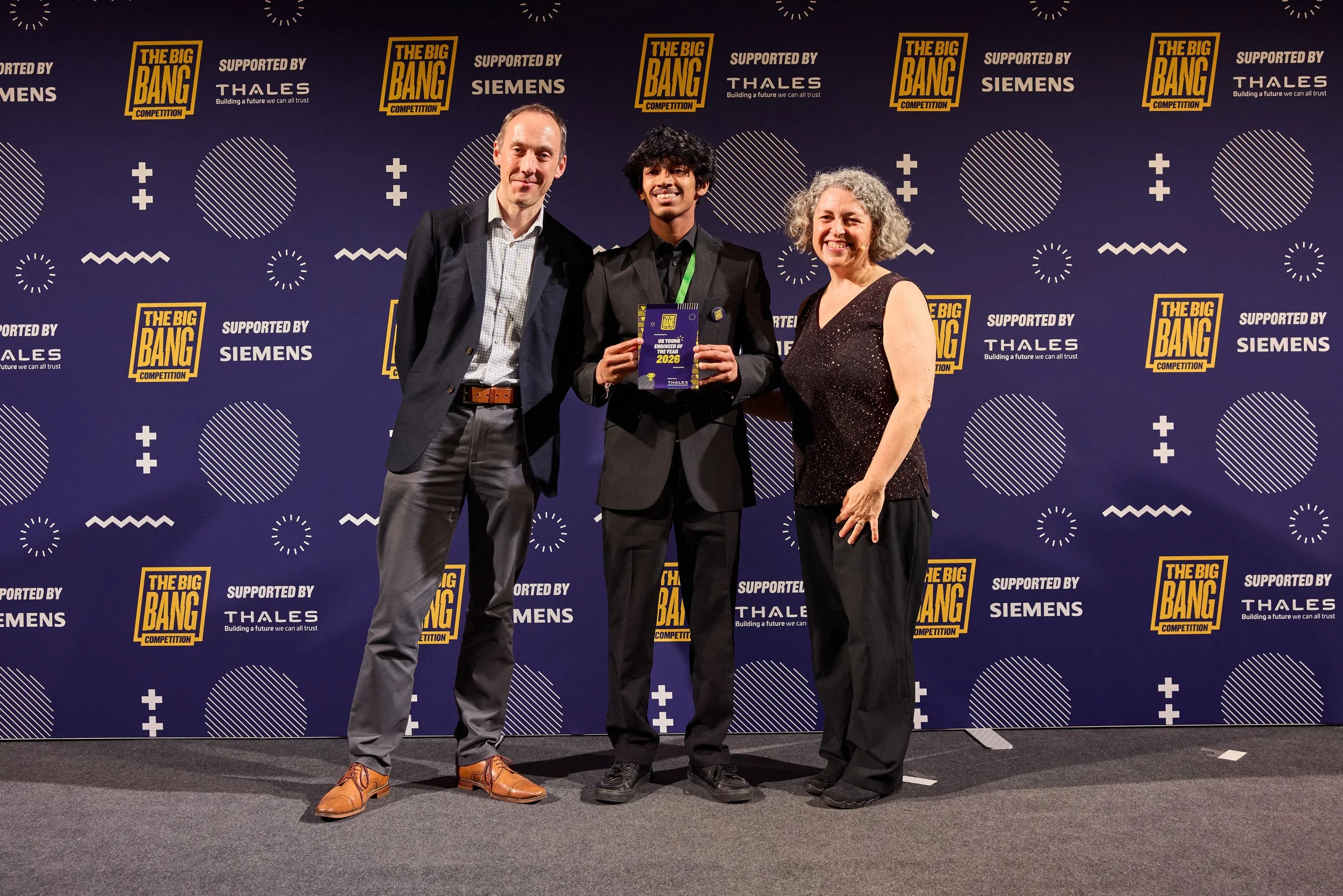
UK Young Engineer of the Year 2026
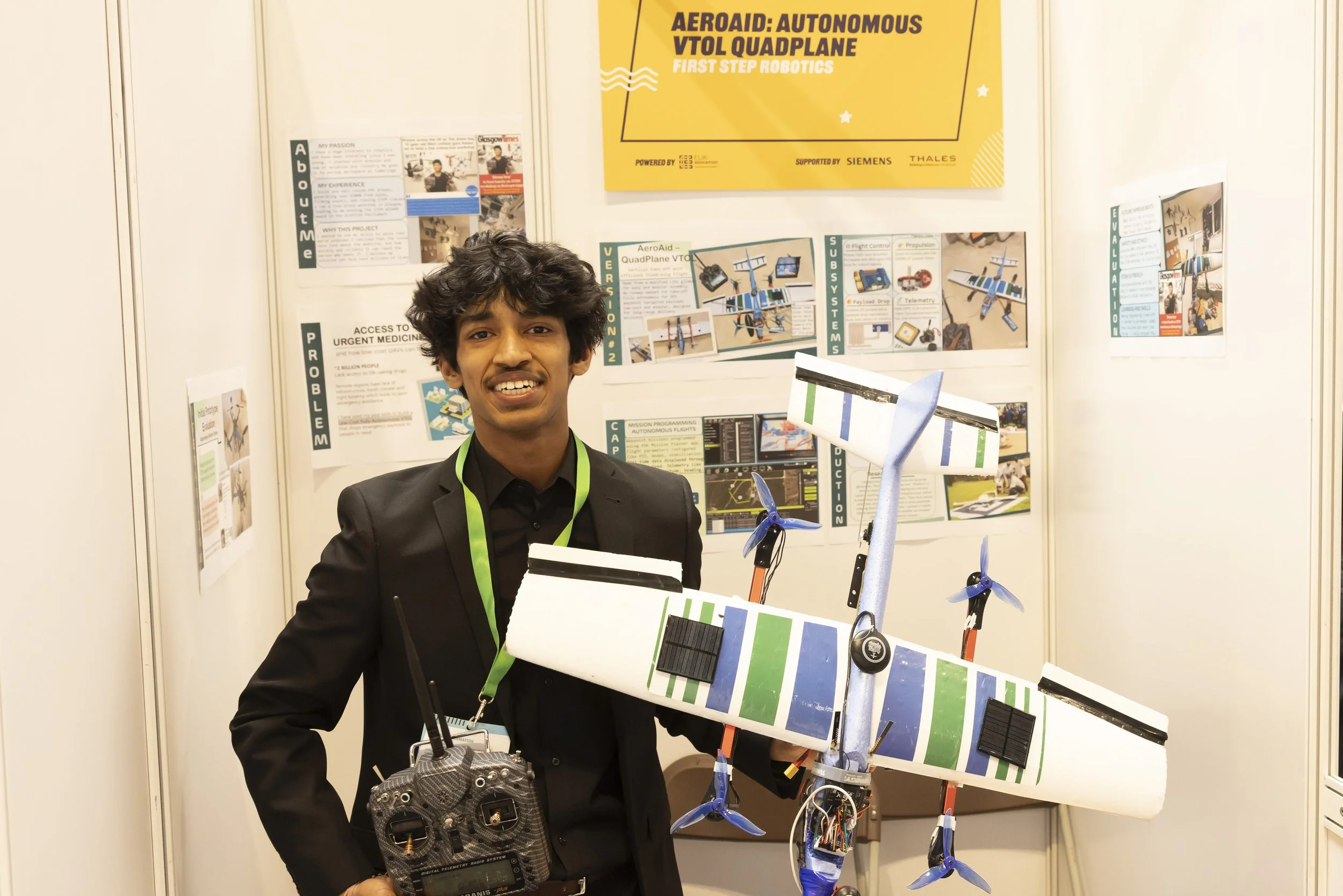
Kanav Jain, a student from Broxburn, Scotland has been crowned UK Young Engineer of the Year, supported by Thales, for his project ‘AeroAid: autonomous VTOL quadplane’. Kanav is currently in S4 and entered via a community group – First Step Robotics.
Kanav was inspired to help people in rural and remote regions where the delivery of essential emergency supplies is challenging due to lack of reliable road access. Using his passion for drones, he has designed and developed a small, low-cost autonomous aircraft that can carry and deliver medicines and other essential supplies quickly and efficiently. Kanav hopes his low-cost, accessible invention will help provide critical humanitarian support and save millions of lives.
Upon winning Kanav commented “It's so surreal! The moment they say your name you completely zone out...because of how much effort you put into it, and to see all of that come to life is really great!”
James Mackay, Head of STEM, UK at Thales commented:
"Congratulations to The Big Bang UK Young Engineer of the Year. We were delighted to see the creativity and impressive STEM skills from all the finalists. Kanav’s project really impressed the judges, along with his tenacity, dedication and drive.
“Supporting these future engineers is truly exciting for us at Thales. The Competition is a great reminder that the next big breakthrough could come from anyone. We need many more young people to pursue STEM careers. It’s been great to see so many students thinking about how they can innovate and create real-world solutions with engineering.”
Engineering award winners
Ellen Rooke, Isla Rollett, Laila Golledge, Maja Nitecka, Olivia Hyde and Summer Tampling from The Thomas Hardye School in Dorchester, Dorset, are Senior Engineering Winners. For their project 'PropaGro' they developed a 3D-printed structure to protect juvenile mangroves during their most vulnerable growth stages while addressing coastal erosion and climate change. In areas where mangroves have experienced local extinction, reintroduction is challenging because young saplings cannot withstand strong wave action and hydraulic forces. Their hexagonal protective structure reduces wave energy, creating sheltered microhabitats that improve mangrove survival and support surrounding wildlife.
Jonathan Joseph, a year 10 student from Wilson's School in Wallington, London, is the Intermediate Engineering winner. Jonathan was inspired to create a low-cost and portable ‘refreshable braille display’ to support those with sight difficulties to use digital devices. Seeking an alternative to the very bulky and expensive options, his device translates information from a computer into tactile braille. He created a python program that allowed him to input text into a Raspberry Pi computer. This translated into physical braille on a machine that he built, containing a single braille cell and touch sensors.
Harrison Ellis, a home educated student from the Doncaster Council Elective Home Education Group, Yorkshire and the Humber, is the Junior Engineering winner for their ‘Woodpecker drumstick’ project. Harrison wanted to find a way to keep his drum practice quiet without requiring expensive soundproof rooms or acoustic drumkits. Inspired by nature, he created quieter 3D-printed drumsticks through a biomimetic engineering investigation into whether a woodpecker's natural impact-absorption ability could be translated into a physical drumstick.
UK Young Technologists of the Year 2026
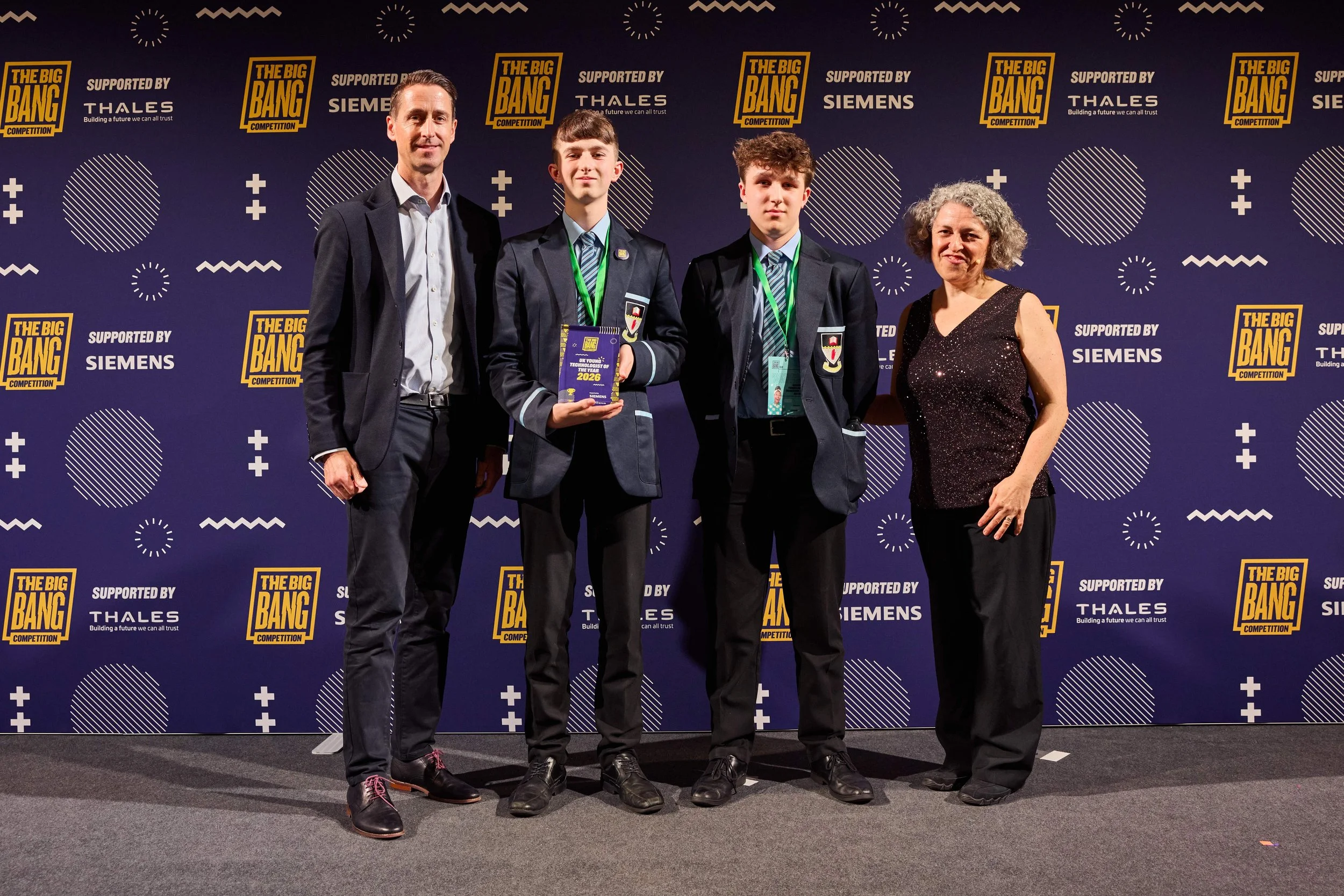
The UK Young Technologists of the Year, supported by Siemens, have been named as Daniel Brownlee and Luke Johnston, year 11 students from Cookstown High School in Northern Ireland, for their project ‘TrailTalk: AI-powered experience mapping’.
The talented team created an app to help travellers find experiences that match how they want to feel, instead of prioritising popularity and ratings as existing platforms do. The duo built TrailTalk using AI, voice input and GPS data to help people discover places that meet both their practical and emotional needs. They hope their invention will help travellers discover meaningful, authentic and personal places, while also promoting sustainable travel and benefitting communities not in typical tourist hotspots.
At the awards ceremony Daniel from the team commented, “It means alot - it's been 2 years of hard work coming into this. It's lovely to see it get recognised in this way. It's been an amazing event to be a part of and to win an award at.”
Mark Wood, Social Sustainability Lead at Siemens GB&I, commented,
“Many congratulations to Luke and Daniel from TrailTalk, two very deserving winners. Their concept is commercially viable and offers a practical solution to an everyday need, with a strong focus on user-friendly design and clear technical capability demonstrated through the development of the app.
“Projects like TrailTalk highlight the imagination and talent that the next generation brings to STEM, boosted by new and developing technologies. Through initiatives such as The Big Bang Competition, young people are encouraged to channel their creativity into solving real-world challenges. And with individuals like Luke and Daniel leading the way, the future is in very capable hands.”
UK Young Scientists of the Year 2026
Jessica Dowdall, Lauren Dowdall, Martha Pugh, and Meike Oakes, a team of year 7 students from Hexham Middle School in Northumberland have beencrowned UK Young Scientists of the Year for their project ‘The plant perfectionists- how does different masses of biochar affect plant growth?’.
Dr Hilary Leevers, Chief Executive of EngineeringUK who run The Competition, said “Massive congratulations to Kanav, Luke, Daniel, Jessica, Lauren, Martha, Meike and all the winners and runners-up. Their curiosity and creativity have driven them to produce some brilliant STEM projects addressing some really big societal problems. They should all be very proud of their dedication and hard work. Competitions like The Big Bang Competition help young people connect their passions with making a real-world difference, it shows young people a future in engineering and technology is possible for them.”
To find out more and discover all the winners and runners-up of The Big Bang Competition 2026 visit: www.thebigbang.org.uk/competition-winners
To find out more about The Big Bang Fair, which is running at Birmingham’s NEC from 9 June to 11 June 2026, visit: www.thebigbang.org.uk/fair